
Trump-Backed Crypto Firm Takes Major Step in Real Estate Tokenization with Maldives Hotel Loan Project
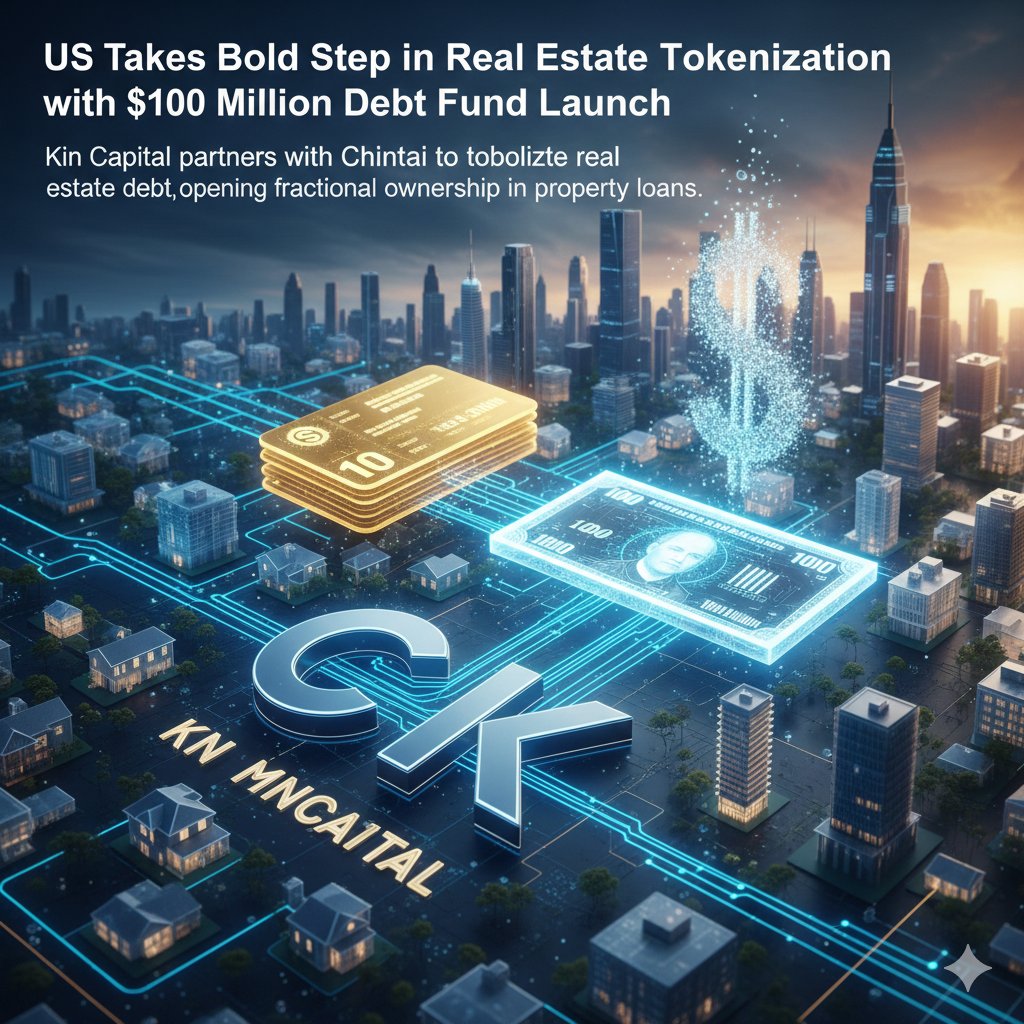
US Takes Bold Step in Real Estate Tokenization with $100 Million Debt Fund Launch
Kin Capital partners with Chintai to tokenize real estate debt, opening fractional ownership in property loans.
What to know:
Over $100 million in real estate debt becomes available as tokenized assets on blockchain.
The fund uses the Chintai network for compliant token issuance, with trades enabling faster settlements and broader investor access.
This initiative aligns with global projections of $4 trillion in tokenized real estate by 2035, growing at 27% annually.
Kin Capital, a digital asset manager, has launched a $100 million tokenized real estate debt fund on the Chintai network, marking a significant advancement in bringing US property investments onto blockchain infrastructure in an announcement earlier this year.
The fund tokenizes ownership in real estate-backed loans, allowing investors to purchase fractional shares through digital tokens. Transactions occur on a regulated platform compliant with US securities laws, with settlements potentially occurring in hours rather than weeks.
The move is part of a broader push in the US to digitize illiquid assets like real estate debt, which traditionally face high barriers to entry and slow liquidity. Proponents highlight how tokenization can democratize access, reduce intermediary costs, and enhance transparency via immutable blockchain records. However, challenges persist, including regulatory hurdles and the need for standardized frameworks, as noted in recent EY analyses on tokenization bottlenecks.
The tokenized real estate sector remains nascent in the US compared to global markets but is gaining momentum. Deloitte’s latest report projects the worldwide market could reach $4 trillion by 2035, up from under $300 billion today, with a compound annual growth rate of 27%. This growth is driven by institutional interest, with surveys showing investors planning to allocate 5-9% of portfolios to tokenized assets by 2027.
US’s evolving tokenization landscape
While early US efforts focused on pilots like Bergen County’s blockchain-based property records for over 370,000 deeds, investment vehicles are now emerging. Kin Capital’s fund builds on this by tokenizing debt securities, expected to dominate the market and contribute up to $2.39 trillion globally by 2035 per Deloitte forecasts.
The fund integrates with existing financial systems, using trust-deed-based lending to ensure backing by real property assets. This setup includes compliance layers like know-your-customer (KYC) protocols and smart contract automation for distributions, aiming to test scalability while aligning with SEC guidelines.
Tokens in the fund are also designed with programmable features, such as automated yield payments and transfer restrictions to qualified investors. This mirrors international efforts, like Dubai’s XRP Ledger-based project, but adapts to US-specific regulations under the GENIUS Act of 2025 and anticipated Clarity Act in 2026, which are paving the way for broader adoption.