RWA Tokenization: Real World Assets on the Blockchain Explained
RWA Tokenization Explained Like You’re 5: How Your House, Gold, or Stocks Can Now Be Owned on Your Phone in 2026
Imagine you have a giant, delicious chocolate bar. It’s expensive—so expensive that none of your friends can afford to buy it. Because no one can buy it, the chocolate just sits there. But what if you could break that chocolate bar into a thousand tiny pieces? Suddenly, everyone has a dollar to spare, and everyone gets to own a little bit of that chocolate.
Table Of Content
That, in a nutshell, is RWA Tokenization.
By 2026, the technology behind this concept has moved out of the “nerdy science experiment” phase and right onto our smartphones. Whether it’s a piece of real estate in London, a bar of gold in a vault, or shares in a private company, the world is being “tokenized.”
But how does it actually work? And why should you care? Let’s break it down as if we’re sitting on a playground.
What is an RWA, Anyway?
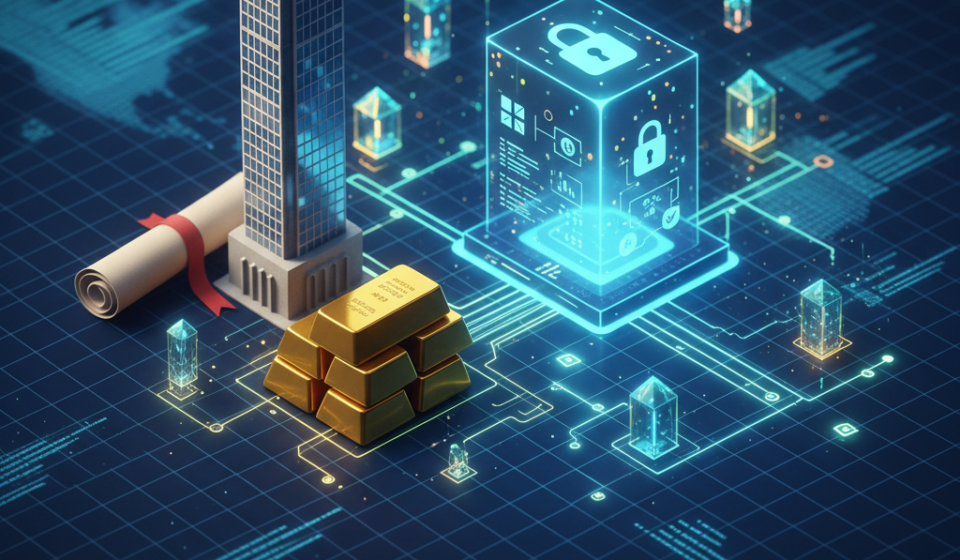
“RWA” stands for Real-World Asset. These are things that exist in the physical world (or “IRL”). Think of things you can touch, sit in, or store in a safe:
- Real Estate: Houses, apartment buildings, or malls.
- Commodities: Gold, silver, oil, or even fine wine.
- Financial Assets: Government bonds, stocks, or private credit.
- Collectibles: Rare Pokémon cards, vintage Ferraris, or Picasso paintings.
In the old days (like, 2022), if you wanted to invest in a $10 million apartment building, you needed to be a multi-millionaire. Today, thanks to tokenization, you just need a phone and a few dollars.
How Your House Becomes a “Token”
Think of a “token” as a digital receipt that proves you own something. In 2026, we use Blockchain technology to create these receipts.
Here is the simple process of how a house gets onto your phone:
- The Appraisal: Experts look at the house and say, “This house is worth $1 million.”
- The Legal Wrapper: A company creates a legal document that says, “Whoever owns these digital tokens owns a share of this house.”
- The Slicing: The house is digitally split into 1,000,000 tokens. Each token represents $1 worth of the house.
- The Listing: These tokens are put on a digital marketplace (like an App Store for investments).
- The Purchase: You open an app on your phone, click “Buy,” and spend $50. You now officially own $50 worth of that house.
Why Doing This on Your Phone is a Big Deal
You might be thinking, “Can’t I already buy stocks on my phone?” Yes, but RWA tokenization is different for three big reasons:
1. You Don’t Need a Middleman
Usually, when you buy a house or expensive gold, you need lawyers, bankers, brokers, and inspectors. They all take a “slice” of your money in fees. With tokenization, the computer code (called a Smart Contract) handles the paperwork. It’s faster, cheaper, and works 24/7.
2. Fractional Ownership (The “Cupcake” Rule)
If you can’t afford the whole cake, you buy a cupcake. Tokenization lets you own 0.001% of a gold bar. This “fractional ownership” means that investing is no longer just for the rich; it’s for everyone.
3. Instant Trading
Selling a house usually takes months. With tokenized real estate, if you need your money back to buy a new car, you can sell your “house tokens” to someone else in seconds, right from your phone.
What Does 2026 Look Like?
By now, the “Wild West” days of crypto are mostly over. The apps we use are regulated, safe, and look just like your banking app. Here’s a typical Tuesday in 2026:
- Morning: You get a notification that the $100 you invested in a “US Treasury Bond Token” just paid you $0.15 in interest. It hits your digital wallet instantly.
- Lunch: You decide you want to diversify. You trade $20 worth of your “Gold Tokens” for $20 worth of a “Rare Art Fund Token” featuring a digital stake in a Banksy painting.
- Evening: Your “Appartment Token” earns rent. Because people are living in the building you partially own, a tiny bit of rent money is automatically deposited into your account.
Is It Safe? (The “Mom” Test)
Every new technology has risks. In the early days, people worried about hackers or losing their digital keys. However, in 2026, RWA tokenization is built on Permissioned Blockchains.
This means:
- Identity Verification: Everyone is “KYC-ed” (Know Your Customer). You know who you are buying from, and the government knows who you are.
- Custody: Big banks now act as “vaults” for your digital tokens. If you lose your phone, you don’t lose your house; you just reset your password through a secure bank portal.
- Legal Backing: The tokens are legally tied to the physical asset. If the company managing the tokens goes away, the law still says you own that piece of the house.
Summary: The World in Your Pocket
RWA tokenization is simply the internet doing to “stuff” what it already did to “information.” Just like Spotify turned giant CD collections into a single app, and Netflix turned movie theaters into a living room experience, tokenization is turning the physical world into something we can trade, share, and own with a single tap.
You don’t need to be a Wall Street genius to participate. You just need to know that the walls between “big money” and “regular people” have finally come down. In 2026, the world isn’t just something you live in—it’s something you own, one token at a time.