How to Spot DeFi Yield Scams in 2026 With Risk Meter Tool
Unrealistic Yield Promises: How to Spot a Crypto Scam Before You Lose Everything
If someone promises you 100% APY with “zero risk,” they’re not offering you an investment — they’re offering you a spot in their exit strategy.
Table Of Content
- Why Anything Above 15–20% APY Should Raise Red Flags
- The Math That Ponzis Can’t Escape
- Real 2026 Examples That Burned Investors
- MegaVault Finance (January 2026)
- NovaStake AI (March 2026)
- GreenYield DAO (May 2026)
- Safe Yield vs. Scam Yield: A Quick Reference Table
- Red Flags Checklist: Print This Out
- What To Do If You’re Already In a Suspicious Protocol
- The Bottom Line
- Interactive Risk Meter: Is That APY Safe or Dangerous?
- 🔍 Yield Risk Meter
Every market cycle brings a fresh wave of unrealistic yield promises that trap newcomers and even seasoned investors. In 2026, these schemes have become more sophisticated than ever, wrapping themselves in professional branding, fake audits, and AI-generated whitepapers. But the math hasn’t changed. If yields look too good to be true, they almost certainly are.
Let’s break down why, look at real examples, and give you a practical tool to protect yourself.
Why Anything Above 15–20% APY Should Raise Red Flags
Before we get into the horror stories, let’s talk about where yield actually comes from in decentralized finance.
Legitimate yield sources include:
- Lending interest — You lend assets to borrowers who pay interest. Rates fluctuate with demand but typically range from 2–12% APY.
- Liquidity provision — You provide liquidity to a decentralized exchange and earn trading fees. Returns vary, but sustainable rates generally sit between 5–20% APY depending on the pair and volume.
- Staking rewards — You help secure a proof-of-stake network. Ethereum staking yields roughly 3–5% APY in 2026. Newer chains might offer slightly more, but rarely above 15%.
- Real-world asset (RWA) yields — Tokenized treasury bills, corporate debt, or real estate income. These mirror traditional finance returns, usually 4–10%.
Notice a pattern? Sustainable yields have ceilings because they’re tied to real economic activity.
When a protocol promises 50%, 100%, or 500% APY, ask one simple question: Where is this money coming from?
If the answer is vague — “our proprietary algorithm,” “AI-powered trading,” or “community-driven rewards” — you’re likely looking at a scheme that pays early investors with deposits from later investors. That’s the textbook definition of a Ponzi.
The Math That Ponzis Can’t Escape
Here’s why unsustainable APYs collapse. Let’s say a protocol promises 200% APY.
- You deposit $1,000.
- After one year, they owe you $3,000.
- Multiply that by thousands of depositors.
For the protocol to honor those returns, it needs a constant and exponentially growing inflow of new money. The moment deposits slow down — and they always do — the protocol can’t pay. Withdrawals get frozen. The team disappears. Your funds are gone.
This isn’t speculation. It’s arithmetic.
Real 2026 Examples That Burned Investors
MegaVault Finance (January 2026)
MegaVault launched on an EVM-compatible chain promising 340% APY on stablecoin deposits through “institutional-grade arbitrage strategies.” They had a slick website, a doxxed (but fake) team, and even a CertiK-style audit badge that turned out to be fabricated.
Within 8 weeks, the protocol accumulated over $47 million in TVL. In week 9, withdrawals were paused for “smart contract maintenance.” The team’s wallets drained the treasury across multiple chains. Investors recovered nothing.
NovaStake AI (March 2026)
Marketed as an “AI-powered staking optimizer,” NovaStake promised 90% APY by using machine learning to rotate between staking protocols. Their Telegram had 60,000 members. Influencers promoted it aggressively.
The reality? There was no AI. Funds were being recycled in a classic Ponzi structure. When on-chain analysts exposed that outflows were being paid directly from new deposits, the token crashed 98% in a single day. An estimated $23 million was lost.
GreenYield DAO (May 2026)
This one was particularly insidious because it framed itself as a “regenerative finance” project offering 120% APY through carbon credit trading. It attracted environmentally conscious investors who wanted their money to “do good.”
The carbon credits were fictional. The DAO governance was an illusion — the founding team controlled all multisig keys. The rug pull happened gradually over three weeks as the team siphoned funds while posting reassuring updates on Discord.
Safe Yield vs. Scam Yield: A Quick Reference Table
| Feature | Safe Yield | Scam Yield |
|---|---|---|
| APY Range | 2–15% (up to 20% in rare cases) | 50–1,000%+ |
| Yield Source | Clearly explained (lending, fees, staking) | Vague or nonexistent explanation |
| Smart Contract Audits | Verified by reputable firms (Trail of Bits, OpenZeppelin) | Fake badges or no audit at all |
| Team Transparency | Verified identities or long track record | Anonymous team with no history |
| Token Emissions | Low or balanced inflation | Hyperinflationary token masking real losses |
| Withdrawal Rules | Withdraw anytime or with short lockups | Long lockups, penalties, or “withdrawal maintenance” |
| TVL Growth | Organic and gradual | Explosive growth fueled by hype |
| Influencer Marketing | Minimal or community-driven | Paid promotions from multiple influencers simultaneously |
| Code Transparency | Open-source, verifiable on-chain | Closed source or unverifiable contracts |
| Longevity | Operating for months or years | Brand new with no history |
Rule of thumb: If you can’t explain where the yield comes from in one simple sentence connected to real economic activity, walk away.
Red Flags Checklist: Print This Out
Before you deposit a single dollar into any yield protocol, run through this checklist:
- [ ] Can you identify the yield source? (Lending fees, trading fees, staking rewards — something concrete)
- [ ] Is the smart contract audited by a reputable firm? (Verify directly on the auditor’s website, not just the protocol’s claims)
- [ ] Has the protocol been operating for more than 6 months?
- [ ] Can you withdraw at any time without excessive penalties?
- [ ] Is the APY below 20%?
- [ ] Is the team known or does it have a long, verifiable track record?
- [ ] Are yields paid in a stable or established asset, not a freshly minted token?
- [ ] Have independent analysts or researchers reviewed the protocol?
If you can’t check at least 6 of these 8 boxes, seriously reconsider your investment.
What To Do If You’re Already In a Suspicious Protocol
Maybe you’re reading this and feeling a knot in your stomach because you recognize something you’re currently invested in. Here’s what to do:
- Don’t panic, but act quickly. Withdraw what you can immediately. Don’t wait to “earn a little more” to make up for potential losses.
- Document everything. Screenshot the website, save transaction hashes, and note wallet addresses. If the project rugs, this information helps investigators and may be needed for legal action.
- Report it. Share your findings with the community on platforms like Rekt News, DeFiSafety, or relevant subreddits. You might save someone else from losing their savings.
- Don’t chase losses. The worst thing you can do after losing money to a scam is jump into another high-yield scheme trying to recover.
The Bottom Line
Sustainable yield is boring. It’s 4% on staked ETH. It’s 8% on a stablecoin lending pool. It’s 12% on a well-established liquidity pair with real trading volume.
Boring keeps your money safe.
Every cycle, people learn this lesson the hard way. In 2026, the scams are prettier, the marketing is sharper, and the promises are bigger. But the underlying truth hasn’t changed since the first Ponzi scheme over a century ago: if the returns don’t come from real economic value, they come from the next person in line.
Don’t be the last person in line.
Stay skeptical. Verify everything. And remember — the best investment you can make is in your own financial education, not in someone else’s unrealistic yield promises.
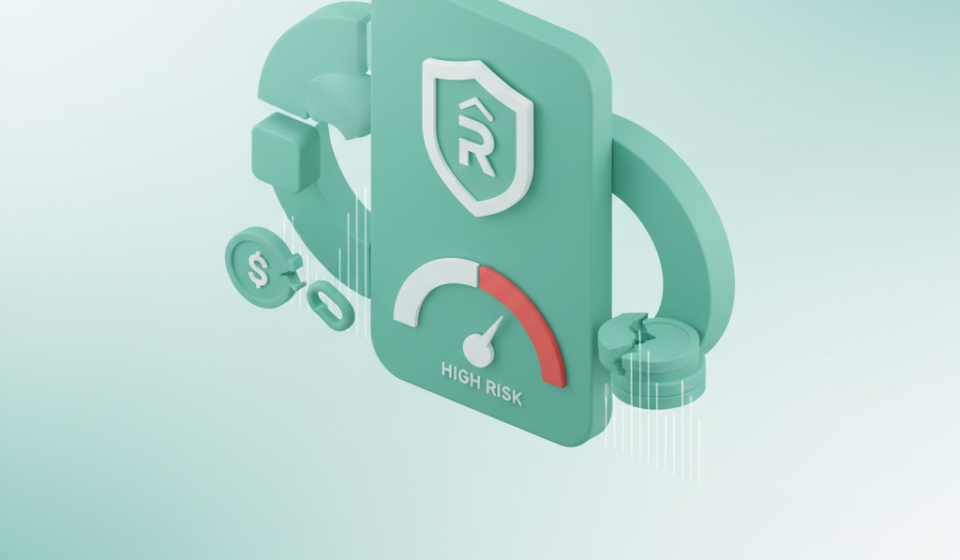
Interactive Risk Meter: Is That APY Safe or Dangerous?
Use this simple tool to gauge the risk of any yield you encounter. Just enter the promised APY, and you’ll get an instant assessment.
How to use it: Copy and paste the code above into an HTML file and open it in your browser, or embed it directly into your website. Type any APY value and hit “Check Risk” to get an instant assessment.
🔍 Yield Risk Meter
Enter the promised APY to check its risk level
% APY